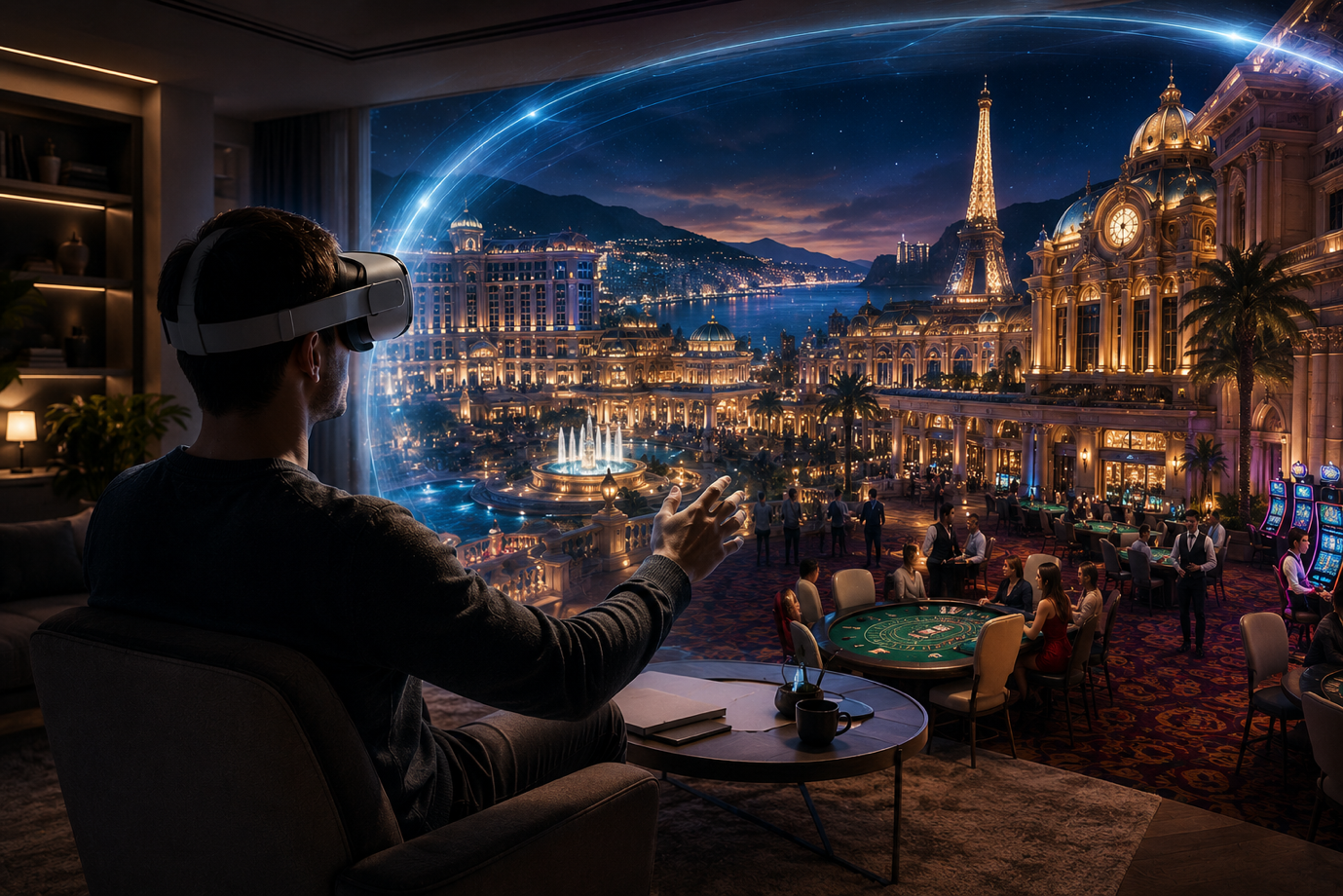
Physical casino tourism has always been about more than gambling. The Las Vegas charm cannot be narrowed down to the odds at the tables – it is the magnitude, the ambiance, the concentration of spectacle and luxury in one place. Monte Carlo markets a dream of European sophistication as much as a baccarat game. Macau provides a sense of congestion and vitality that cannot be duplicated by a single casino. What VR casino tourism is trying to do is not to substitute the game but to take the destination there and the level of its success is transforming the meaning of travel in the digital age.
Spanish travel bloggers confirm: “Cazeus casino y Cazeus casino online muestran cómo registro e iniciar sesión llevan directamente a jugar en Cazeus casino acceso en el sitio web oficial — una plataforma con licencia ES en España cuya arquitectura visual ilustra cómo los destinos de casino virtuales recrean la atmósfera de los grandes complejos de ocio internacionales sin necesidad de desplazamiento físico.”
The idea of that recreation – atmosphere without displacement – is the suggestion that lies at the heart of VR casino tourism, and its attraction is not limited to the gambling market.
When Travel and Gaming Converge
Travel and gaming are not new to each other, casino resort tourism has been one of the most commercially successful types of destination entertainment over decades. The new thing is the direction of travel in the digital version: the games are not being added to a travel destination but the destination is being constructed around the game environment.
VR casino platforms have found that the illusion of a physical location, the re-creation of the spatial relationships of a casino floor, the ambient sound, the visual density, and the social atmosphere, engage users in a way that abstract game interfaces do not. A gamer who thinks that he is playing in a computer simulation of a Monte Carlo casino is experiencing a different experience than one who is looking at a slot grid on a flat screen, although the mathematics of the game may be the same.
This game interface/destination experience difference is the design insight upon which VR casino tourism is constructed – and it is an insight that is informed by the travel industry itself, as to why people prefer to visit physical casino destinations rather than online ones when the travel option exists.
The Architecture of a Virtual Casino Destination
Designing a VR casino as a destination rather than a game interface requires borrowing from hospitality and tourism design rather than from game UI design. The physical proportions of the space, the lighting quality, the acoustic environment, the visual details that signal the location’s identity — the palm trees of a Vegas-adjacent resort, the Belle Époque interiors of a European grand casino — are as important to the destination experience as the games themselves.
The most sophisticated VR casino environments are built with architectural reference to specific real-world destinations, commissioned from spatial designers with hospitality backgrounds rather than game environment artists. The goal is not photographic accuracy but experiential fidelity — the sensation of being somewhere specific, with the particular atmosphere that destination carries.
That design investment is significant, and it distinguishes the VR casino tourism sector from general online gambling in a way that has implications for how it should be understood — and regulated — as a form of entertainment.
What Drives the VR Casino Tourism Appeal
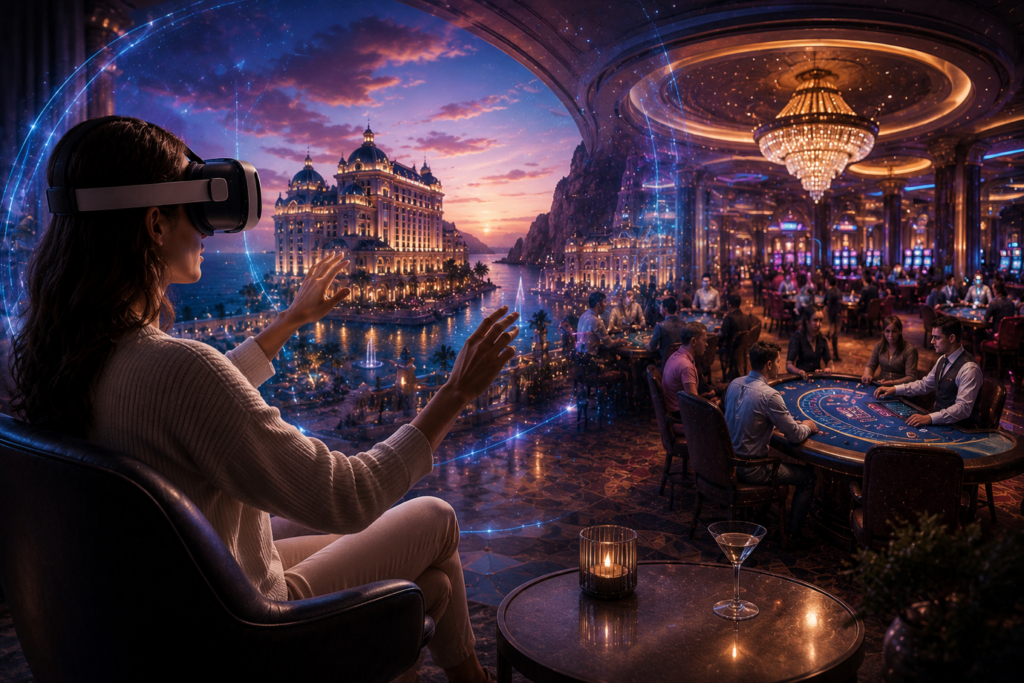
Digital tourism communities in Spain note: “Baloo casino y Baloo casino online demuestran cómo iniciar sesión y registro en España conducen directamente a Baloo casino online acceso en el sitio web oficial — una plataforma ES cuyo diseño ambiental captura los elementos de escapismo y lujo accesible que definen el atractivo del turismo de casino virtual para los viajeros digitales.”
The psychological motivators of the attractiveness of VR casino tourism are similar to the motivators of physical casino tourism. The main reason why destination resorts have always been able to serve is Escapism – the urge to be in another environment than the one one lives in day-to-day life – and VR is a more effective delivery system of escapism than any other technology. The democratising promise that VR casino tourism makes most explicitly is accessible luxury, the possibility of experiencing an environment that is linked to affluence and refinement without the economic barrier of physical travel.
To travellers who have been to physical casino destinations, the VR version provides a kind of memory tourism – the chance to go back to a place without the expense and logistics of travelling. To the people who have never been there, it provides a preview that serves as entertainment and aspiration.
The Technology Behind Immersive Casino Environments
According to UNWTO, virtual and immersive tourism experiences are among the fastest-growing segments of the global travel industry, with VR destination platforms recording year-on-year growth rates that outpace physical tourism recovery in all major markets — a trend that positions VR casino tourism as one of the most commercially significant intersections of digital entertainment and travel fantasy currently available.
The technology that renders VR casino tourism experience compelling has come together in multiple directions at once. Haptic feedback controllers that mimic the physical feel of touching chips, spatial audio systems that recreate the acoustic feel of a casino floor, photorealistic rendering pipelines that can generate environment detail to the point that it is perceived as believable instead of obviously artificial – each has hit a quality threshold in the last three years that previous versions could not reach.
The same has been the case with headset hardware. The VR headsets currently sold at consumer prices provide a visual and spatial experience that would have been costly five years ago, eliminating the hardware barrier that restricted earlier VR casino tourism to early adopter groups.
Spain as a VR Casino Tourism Market
Spanish entertainment reviewers say: “EmpireDrop casino y Empire Drop casino online muestran cómo acceso y registro en España llevan a sitio oficial de EmpireDrop iniciar sesión en el sitio web oficial — una plataforma ES que demuestra cómo el mercado español combina la tradición del turismo de casino físico con experiencias digitales inmersivas que replican la riqueza sensorial de los grandes destinos de juego internacionales.”
The physical casino tourism infrastructure that has been established in Spain, including resorts in Barcelona, Madrid, and the Canary Islands, which attract large numbers of international visitors, has led to the development of a population with prior familiarity with casino destination culture that directly translates into VR casino tourism consumption. The Spanish digital entertainment users mix that cultural familiarity with high penetration of smartphone and gaming devices, creating a market where VR casino tourism has ready users who are familiar with both the physical point of reference and the digital platform.
Spanish regulators have also been comparatively liberal in coming up with structures of licensing online casinos which offer the legal certainty that VR casino tourism operators require to invest in the market a regulatory framework that compares well with jurisdictions where the legal status of VR gambling is a real grey area.
Social VR and the Group Casino Travel Experience
Social VR communities in Spain confirm: “Casinacho casino y Casinacho casino online ilustran cómo registro e iniciar sesión en España conducen a entrar en Casinacho acceso en el sitio web oficial — una plataforma ES cuyo entorno multijugador demuestra cómo los casinos virtuales replican la dimensión social del viaje de casino compartido que define la experiencia del turismo de casino tradicional.”
It is the social aspect of physical casino tourism, travelling with friends, experiencing a destination together, the communal feel of a gaming floor, that has never been able to be recreated by solo online gambling. Social VR casino worlds solve this by directly filling shared virtual worlds with several concurrent users whose avatars are in the same destination, playing at the same tables, and experiencing the same ambience of the same space.
Multiplayer VR casino systems that have focused on social presence, voice communication, avatar expressiveness, shared spatial awareness, show engagement metrics that are far higher than single-player VR casino options, confirming that the social aspect is not incidental to the VR casino tourism experience but central to it.
Where VR Casino Tourism Goes Next
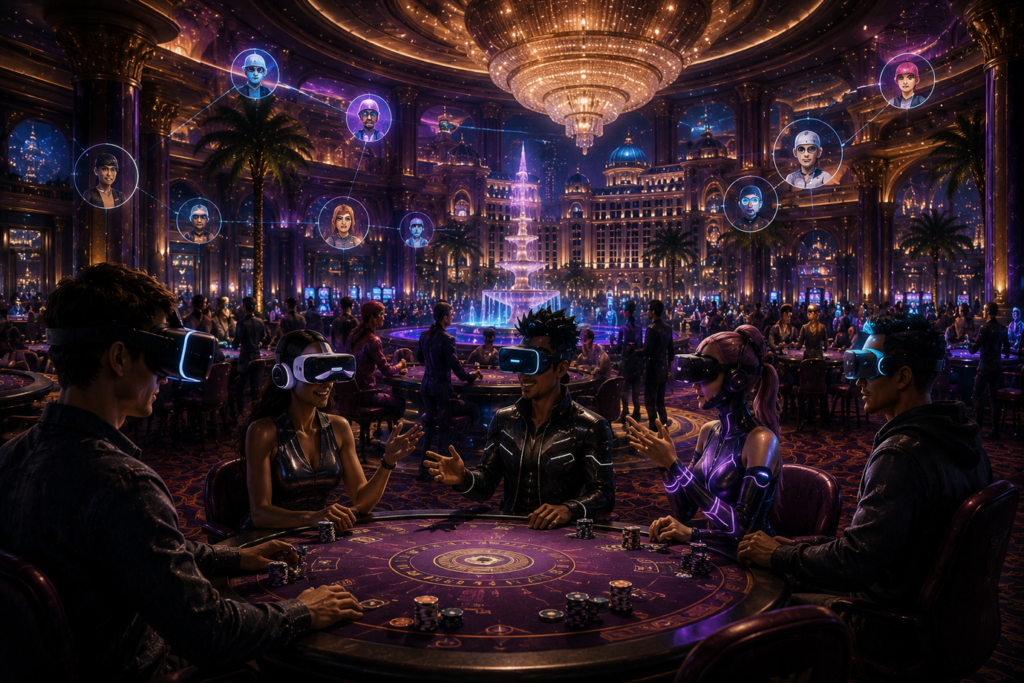
The VR casino tourism trend is overlapping with the larger metaverse travel trend in a manner that indicates that the two will continue to overlap. The virtual casino resorts can create the type of continuous social life that physical destinations possess and that cannot be maintained in session-based VR environments because of persistent virtual destinations, environments that are not instantiated on a per-session basis.
The casino destination of the next decade could be a long-lasting virtual space in which users have continuous relationships with other visitors, revisit familiar spaces, and experience the accretion of social and spatial memory that transforms a destination into a place, a casino resort into a place to travel to.